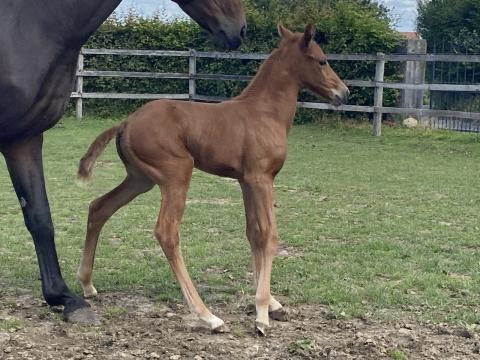
Artificial insemination with chilled or frozen semen, and the fast transport possibilities in Belgium, make it possible to choose from a large number of stallions in Belgium, Europe and the world. It is no longer necessary to use a stallion close to the mare and to serve her naturally, the semen can be shipped from anywhere in the world.
The qualities and characteristics of the stallions are published in our catalogue, in equestrian magazines or on the Internet, and many stallions are often presented at stud open days or stallion shows. This can make choosing a stallion for your mare easier, as the information is readily available, but it can also make it more difficult, as there are so many stallions to choose from that you are spoilt for choice!
When choosing a stallion you need to consider many attributes such as temperament, conformation, type, colour and ability, but first and foremost you need to think about your mare and the type of offspring you are trying to produce, as well as the discipline you wish to use her in. Look at your mare's strengths and weaknesses such as conformation, size, type and temperament, see what you like and dislike so that you can choose a stallion with attributes that would not repeat your mare's weaknesses or faults.
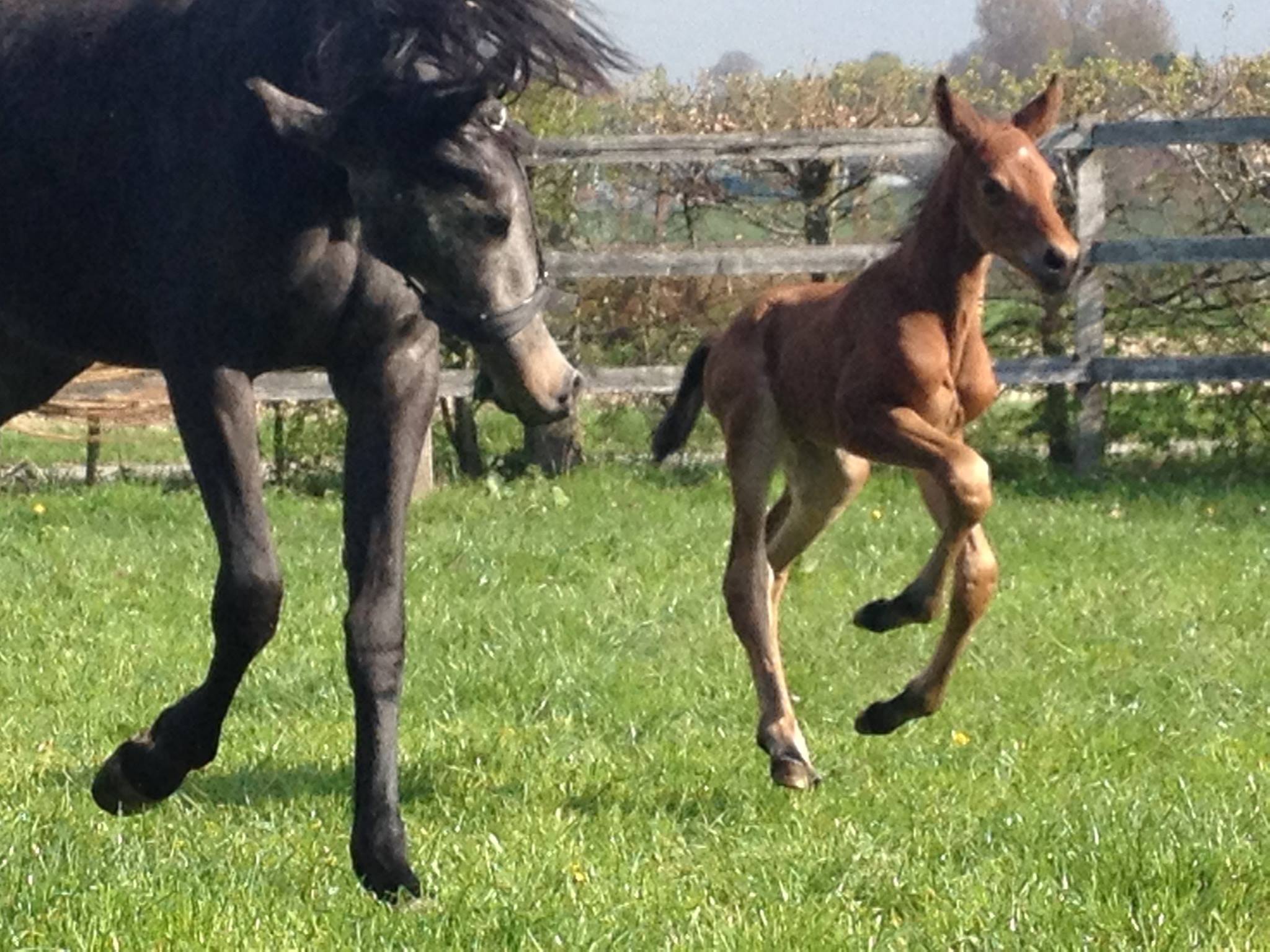 For some, it is customary to "make warm water by mixing hot and cold water". For example, if your mare has a very straight hock, they would choose a stallion with a bent hock in the hope that the foal might end up halfway between the two. Conversely, if your mare has an exceptionally good characteristic, you might feel you can take a risk by choosing a stallion that is not good in that area, but has other attributes that you like. For example, if your mare has a great temperament and the stallion is known to be a bit eccentric, but has fantastic conformation and ability, you might consider taking a risk and using him. Don't. Or rather, we advise you not to if it is one of the most important criteria to you.
We advise you to analyse your objectives, the market you are operating in, and to choose stallions that match the type of offspring you are trying to produce. If he has the same qualities as your mare, and these are important qualities for your goals, all the better. You increase the chances of getting a product that meets your expectations. Do not compromise on the qualities that are important to your goals, even if your mare has them. It is a good idea to select several stallions that have the qualities you expect, and to make your final choice, take a critical look at the stallion's faults and compare them to those of your mare, and finally discard stallions that have the same faults as your mare. By weighing up the selection criteria, and being uncompromising in choosing those that are most important to you, you will make faster progress in the genetic selection of your offspring.
Many people say that the mare is more important than the stallion because she genetically provides more characteristics and abilities to the offspring. We believe that it is much easier to get the mare wrong than the stallion. This is because breeders will usually have access to high genetic stallions, whereas it is more complicated to breed with good dams, which are usually difficult to acquire. Embryo transfer changes this idea a little bit, and that is very good. It is now possible to buy an embryo from a good mare, to start breeding on a good basis. When the quality of the mare is unsatisfactory, it is very likely that the best stallion cannot produce good foals with her. It is therefore very important to keep a very critical eye on your own mares, rather than hesitating between the 3 best stallions that meet your criteria.
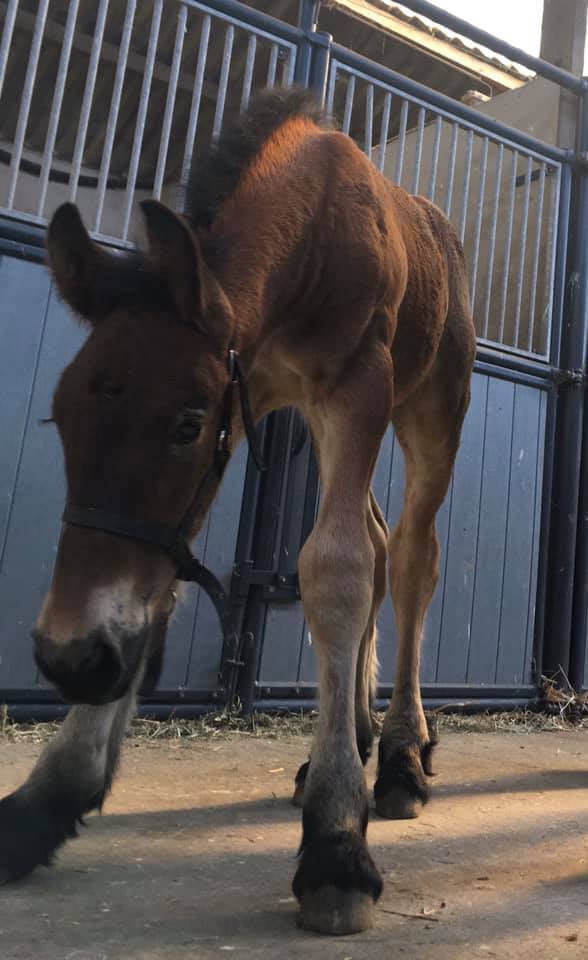 For many breeders the stallion's pedigree is very important, especially when it comes to selling young stock, a fashionable stallion named as sire can make the youngster more attractive to a buyer or to show at an auction. However, speculating on a new young stallion can be a very rewarding thing to do, as you can use him and have an offspring before anyone else.
Finally, studbooks define selection standards for the breed, including conformation, temperament, health and performance criteria. These standards are used to evaluate the quality of the animals and to guide breeding programmes. The studbook in which the stallion is registered or licensed to produce foals can therefore also be important to analyse. Approvals in studbooks are important to prevent the use of stallions of poor conformation and breeding ability, as prior to approval, stallions undergo a veterinary examination that varies from studbook to studbook, which may include X-rays, endoscopies, locomotor examination, spermogram,... to ensure that they have no congenital problems that can be transmitted to foals and that they are fertile. Different studbooks have different protocols, and some are sometimes stricter than others on certain criteria. The opinions of the studbooks can be very useful when choosing your stallion.
Add new comment